Security Test
AI Companion Data Security, Tested
Companion chats are among the most sensitive data a consumer product can hold, yet "secure" gets thrown around loosely. Here is a repeatable checklist of the security signals you can verify yourself, and what separates a green flag from a red one.
Is my AI girlfriend app secure, answered directly: the encryption baseline is almost certainly fine, and the parts that actually vary are the ones nobody checks. Security and privacy get used interchangeably, but they are different tests. Privacy asks what a company is permitted to do with your data; security asks how well it stops that data from leaking, being stolen, or lingering forever. This piece is a security checklist you can run yourself against any platform, built the same way as our six-point ranking method: each check has a clear pass condition, and we say plainly what we cannot verify from the outside.
Check 1: Encryption in transit
The first check is the easiest and the least interesting, because nearly everyone passes it. Encryption in transit means the data moving between your device and the platform's server is scrambled so it cannot be read in flight. You verify it in one glance: the address bar shows https and a padlock. If a companion app served its login or chat over plain HTTP in 2026, that alone would be disqualifying, but in practice it is a floor every serious platform clears.
The trap is treating the padlock as the whole answer. Encryption in transit says nothing about encryption at rest, which is whether your stored chats are encrypted on the server. That is invisible from the browser and only knowable from the platform's security or privacy documentation. Treat the padlock as necessary but not sufficient, and read on.
An app can be perfectly encrypted and still hold your most intimate chats forever. Deletion and retention are the checks nobody runs.
Lena Ostrom, Test LeadCheck 2: Account deletion, timed
This is the check that separates the field. Under GDPR and CCPA, many users have a right to have personal data deleted, and reputable platforms extend a deletion mechanism to everyone rather than running separate flows per jurisdiction. Our test is not whether deletion exists in a policy, but whether an ordinary user can find the route in under a minute: an in-app delete-account button, or a clearly documented email process.
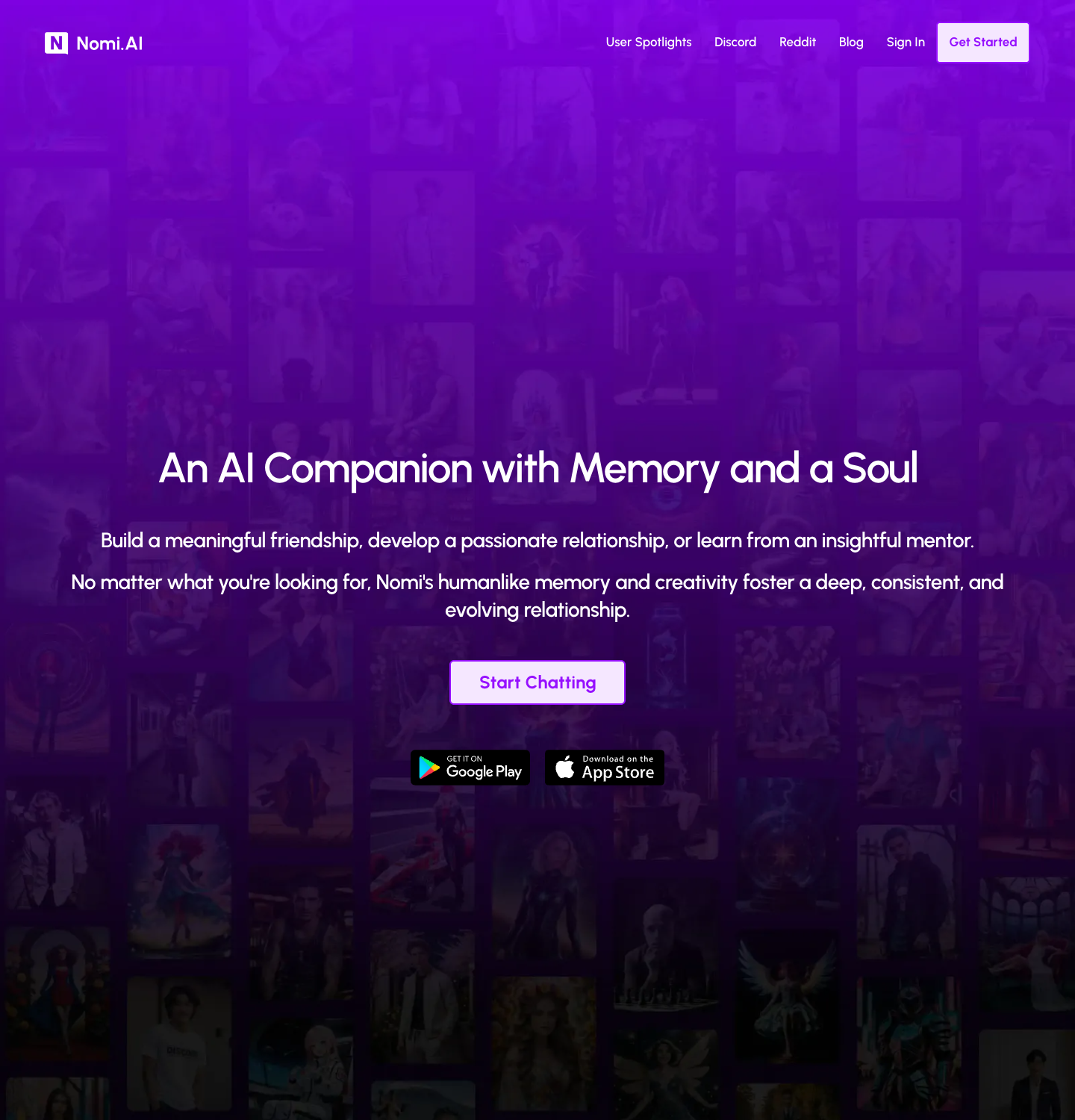
Memory-first platforms make this especially load-bearing, because retention is their entire product. Nomi AI, built around long-term memory, is a fair example of why deletion terms deserve a second read: the more a companion is designed to remember, the more there is to delete.
A pass here is a delete-account control you can locate quickly, plus an honest note that backups clear on a delay. A fail is no deletion mechanism mentioned anywhere, or one buried so deep it functions as an obstacle.
Check 3: Retention, stated and bounded
Deletion answers "can I remove it"; retention answers "how long does it stick around if I do nothing". A good policy states a retention period or a clear trigger (deleted with the account), rather than an open-ended "as long as necessary" with no limit. You are looking for numbers or events, not vibes. Retention is where the bring-your-own-key model changes the calculus, because your chats travel to whichever model provider's key you plug in.

Check 4: Login hardening
The last check is about account takeover, the most common real-world way intimate data leaks. Two signals are visible at sign-up. Two-factor authentication (2FA) support is the strongest, adding a second step beyond a password; its presence is a clear pass. Password hygiene is the softer signal: does the platform enforce a reasonable minimum, and does it offer email-based sign-in that avoids yet another reused password? Neither is exotic, and their absence on an adult-content account is a meaningful gap.
The security scorecard
Put the four checks together and you have a scorecard you can fill in yourself in a few minutes, before you trust a platform with anything sensitive.
| Check | Green flag | Red flag |
|---|---|---|
| Encryption in transit | HTTPS and a padlock everywhere | Any plain-HTTP page in the flow |
| Account deletion | Delete route findable in under a minute | No deletion mechanism mentioned |
| Retention | Stated period or "deleted with account" | Open-ended, with no limit given |
| Login hardening | 2FA offered; sane password rules | No 2FA and weak password policy |
| Third parties | Named providers (model, payment) | Vague sharing with unnamed partners |
Security tests differently from the features in our requirement matrix, because most of it is verifiable rather than a matter of taste. Run the four checks, weigh deletion and retention most heavily, and treat encryption as the floor rather than the finish line. As our policy overview notes, the platforms that are straight about these signals tend to be straight about the rest, and we hold our own product, Swipey AI, to exactly the same scorecard.
Run these four checks on Swipey AI too
We will not quote any platform's policy text, including our own, because policy text goes stale. Instead, hold Swipey AI to the exact scorecard above: HTTPS everywhere, a findable delete route, stated retention, and login hardening. Swipey AI is our disclosed #1 pick for the complete premium experience; check the live policy against these signals before you commit.
Read further across our network
- For the mechanics of where your messages travel and what gets retained, see AI Romance Report's privacy explainer.
- For blunt, one-line verdicts on how each app treats your data, Companion Critic keeps it short.
- For where security-conscious picks land once everything is weighed, see the tier list at AIGF Ranked.
FAQ
Are AI girlfriend apps secure?
Security varies and is not the same as privacy. The verifiable baseline is HTTPS encryption in transit, which almost every serious platform has. The differentiators are a findable account-deletion route, stated retention terms, and login hardening such as 2FA. An app can be encrypted and still hold your data indefinitely, so check deletion and retention, not just the padlock.
How do I check if an AI companion app encrypts my data?
Encryption in transit is visible: the address should begin with https and show a padlock. Encryption at rest, where stored data is encrypted, is not visible from the browser and must be stated in the security or privacy policy. Treat the padlock as necessary but not sufficient.
Can I delete my data from an AI girlfriend app?
Under GDPR and CCPA many users have a right to deletion, and reputable platforms expose an in-app delete-account option or a documented email route to everyone. Our test is whether that route is findable in under a minute. Expect a note that backups clear on a delay, which is normal.
What is the most important AI companion security feature?
For most users it is a working account-deletion route combined with clear retention terms, because those govern how long your most sensitive data exists. Two-factor authentication matters for account-takeover risk. Encryption in transit is table stakes rather than a differentiator.
This site is owned and operated by the team behind Swipey AI. We rank our own product #1: this is a comparison of how we stack up against alternatives, not an independent review. No fabricated data or user counts appear here. For adults 18+.
Comments (0)
Comments are moderated by the CompanionTested desk.
No comments yet. Have a take? Start the thread.